Back

Interior Designer Career in the UK: From First Sketch to Signed-Off Project
02/10/2026
Interior Designer Career in the UK: From First Sketch to Signed-Off Project
It's 8:45 on a Monday morning. You're standing in an empty hotel lobby with a tape measure, a swatch book and a client who wants the space "warm, but not too warm." By Friday you need a floor plan, a mood board and a budget that survives the contractor's first phone call. Welcome to the interior designer career. It is part artist, part project manager, part diplomat, and one of the most rewarding creative paths in the UK. If that kind of organised chaos appeals to you, this guide is for you. We'll cover what interior designers actually do, how to qualify, what you can earn and how to land your first role. We've used real UK figures rather than guesswork.
What an Interior Designer Actually Does
Interior designers plan the internal layout and look of homes, offices, hotels, restaurants, shops and public buildings. The work goes well beyond choosing paint colours. You're solving problems about how people move through, use and feel in a space.
A Typical Project, Start to Finish
Most projects follow a similar rhythm, whatever the size of the building.
Stage 1: Briefing and Concept
You meet the client, ask what the room needs to do and set the budget and timeline. Then you turn those answers into mood boards, sketches and early layouts. This is where good listening pays off.
Stage 2: Technical Design
Concepts become floor plans, elevations, lighting layouts and material schedules. You'll usually work in CAD and 3D software here. Attention to building regulations, accessibility and safety matters as much as style.
Stage 3: Sourcing and Delivery
You find suppliers for furniture, fabrics and fittings and estimate costs. You coordinate contractors and keep the project on schedule. Many designers say this stage is where the job is won or lost.
Interior Designer vs Interior Decorator
The two terms get mixed up constantly. Decorators focus on surface styling such as colour, furnishings and accessories. Designers also work on structure, layout, technical drawings and regulations. If you want the wider, more technical scope, aim for the designer route.
Qualifications and Routes into the Profession
There's no single door into this career. According to the National Careers Service interior designer profile, you can get in through a university course, a college course, an apprenticeship or by working your way up.
University and College Routes
A foundation degree, HND or degree in interior design, interior architecture, spatial design or art and design is the most common starting point. Courses that include placements are worth prioritising, because industry contacts often turn into first jobs.
Apprenticeships and Working Your Way Up
Prefer earning while you learn? You could start as an interior design assistant and build qualifications alongside real project experience. It's a slower start, but you'll build a portfolio of live work as you go.
Professional Bodies Worth Knowing
Joining a professional body gives you credibility, networking and CPD. Two names come up repeatedly in UK interior design: the British Institute of Interior Design and the Society of British and International Interior Design. Many degree courses offer student membership, so ask about it early.
Skills and Software Employers Expect
Employers hire for a blend of creative and technical ability. Recent listings and industry guidance point to a consistent toolkit.
Technical Skills
- AutoCAD for precise 2D drawings and layouts - SketchUp for fast 3D concept modelling - Revit for BIM-based projects, especially larger commercial work - 3ds Max or Blender for realistic visualisations - Adobe Photoshop for presentations and mood boards - Material and space-planning knowledge so your designs can actually be built Don't try to master everything at once. Pick the two or three tools that appear most in the vacancies you want, then add more as you grow.
People Skills That Set You Apart
Clients rarely know exactly what they want. Designers who can listen, explain decisions calmly and handle feedback without getting defensive tend to progress fastest. Being organised under pressure matters just as much as having a good eye.
Interior Designer Salary in the UK
The National Careers Service gives an average salary range of roughly £23,000 for starters up to £45,000 for experienced designers. Where you land depends on region, sector and whether you work in-house, in a studio or for yourself.
What Moves the Needle
- Location: London and other major cities usually pay more, though living costs rise too. - Sector: hospitality and commercial fit-out often pay differently from residential work. - Specialism: strong technical skills such as BIM can raise your value. - Portfolio: proven, completed projects beat qualifications alone. Treat any average as a starting point. The best way to see real numbers is to browse live design jobs and compare what employers are offering right now.
Where Interior Designers Work
The career isn't one-size-fits-all. Here are the main directions.
Residential Design
Homes, extensions and renovations. It's personal, client-led work with close relationships and lots of variety.
Hospitality and Retail
Hotels, restaurants and shops need spaces that shape how customers feel and behave. Brand storytelling is a big part of the job.
Workplace and Commercial
Offices are being redesigned around hybrid working, wellbeing and collaboration. This sector often suits designers who like structure and technical detail.
Studios, Practices and Freelance
Interior designers work in design studios, architectural practices, property developers, furniture brands and fit-out companies. Many go freelance once they have a strong client base.
Building a Portfolio That Gets You Noticed
For interior design, your portfolio is your CV. Include floor plans, material boards, 3D visualisations and photographs of completed work where you have them. Show your thinking, not just the polished result. For a detailed walkthrough, read our guide to building a design portfolio that gets you hired. No client work yet? Create realistic self-initiated projects, such as redesigning a café or a small flat with a fictional brief. Employers value initiative.
How to Find Your First Interior Design Job
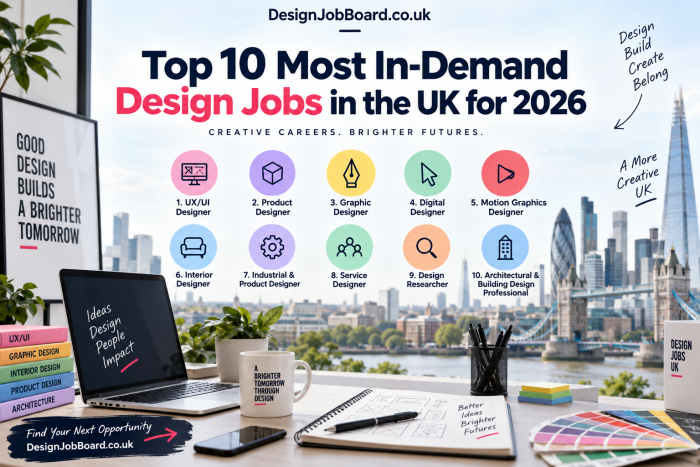
1. Search widely. Look at interior, spatial, CAD and design assistant titles, not just "Interior Designer." 2. Target junior routes. Browse entry-level design roles and assistant positions to build experience. 3. Consider location. Explore jobs in London and other city pages to compare opportunities. 4. Stay visible. Register your CV and set up alerts so new vacancies come to you. 5. Keep learning. Our most in-demand design jobs guide shows which skills employers are asking for.
Final Thoughts
An interior designer career rewards people who can hold two ideas at once: creative vision and practical detail. The route in is flexible, the salary range grows with experience, and the work changes the way people live and work every day. Your next step is simple. Explore current designer jobs on Design Job Board and see which roles match your skills. For more guidance, visit our career advice hub. Which part of the job excites you most: the concept, the technical drawings or the finished reveal? Tell us in the comments. Knowing that is often the first clue to your ideal specialism.
Frequently Asked Questions
1. Do I need a degree to become an interior designer in the UK?
Not always. The National Careers Service lists university, college, apprenticeship and work-based routes. A degree or diploma can help, but a strong portfolio and practical software skills matter greatly to employers.
2. How much does an interior designer earn in the UK?
According to the National Careers Service, salaries range from about £23,000 for starters to around £45,000 for experienced designers. Location, sector and specialism all affect pay.
3. What software should I learn for an interior design career?
AutoCAD, SketchUp, Revit, 3ds Max or Blender and Adobe Photoshop are common. Start with the tools listed in the jobs you want, then expand your skills over time.
4. What is the difference between an interior designer and an interior decorator?
Decorators focus on surface styling such as colours and furnishings. Interior designers also handle layouts, technical drawings, materials and building regulations, so the role is broader and more technical.
5. How do I get my first interior design job?
Build a focused portfolio, apply for assistant and junior roles, join a professional body and register your CV with a specialist job board. Personal projects can fill the gap if you lack client work.